#GIVEASHIT
Did you just say Pee Fertilizer?

A typical toilet flusher wastes up to 22 liters of drinkable water every day and three- to six-liter flushes at a time. What follows is a long and costly process of sanitizing the water that was clean before you answered nature’s call. Using so much water per flush unnecessarily increases the volume of our waste and the cost of its transportation and treatment –a process that leaves a huge carbon footprint.
Why Pee?
It’s the method of treating your pee and poo as two separate entities. Urine Diversion (UD) is a process that splits the two at the source, no longer leaving you with waste, but with two very valuable resources. Urine and feces are partitioned into two compartments. Urine will go through one compartment and feces will go through another. Both are then stored in separate holding tanks.
Valuable plant nutrients are found in human excreta. A higher proportion of these nutrients – nitrogen, phosphorous and potassium –reside in your urine compared to your feces. The exact breakdown of urine varies depending on the diet of the pee-maker. The more protein a person consumes, the more nitrogen will be excreted into the urine. Urine also contains salt – sometimes quite a lot of it if you are hopped up on a diet of canned soup and French fries.
Try it at home
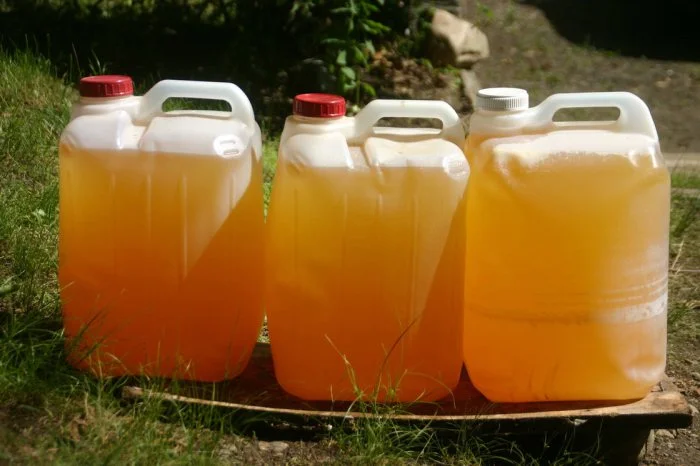
To use urine as a fertilizer safely, it should be stored for 1 to 6 months in a sealed container. When urine is stored the pH value, which is usually 6 – 7, will increase to around 9 as urea decomposes into ammonia/ammonium. This process sanitizes the urine overtime killing off pathogens. The longer the urine is stored the more sanitized the urine will become, thus increasing the variability of crops that can be fertilized. For instance, urine that is stored for 6 months can be safely used on all types of crops for consumption.
Grossness factor
A disadvantage of maintaining a pit latrine is the cleanup process. Not only is discarding the waste laborious and messy, but quite smelly as well. UD would make this step much easier by keeping the feces dry. The foul smelling fecal sludge that we all associate “shit” as is the result of feces and urine mixing. The more time dedicated to “drying out” the feces will ultimately transform the substance into an easily handled ashy and odourless type of material. The dried feces can be used for composting but must be stored much longer than urine in order to efficiently kill off the large variety of pathogens that live within feces.
If designed and operated properly a UD toilet can be built indoors, improving the users security and enhance privacy. This can be an essential feature for women and girls who may not utilize the toilet at night for safety reasons. In addition, building the UD system indoors allows it to be paired or in close proximity to a hand washing station. This is important as it could increase hand-washing rates, which would alternatively improve hygiene.
Its got potential
At Manavta, we are currently working on putting together a pilot project that will showcase our UD toilet designs and provide us further research on its uses and disadvantages. Since WASH in schools is about engaging the greater community, we see these toilets as a tool to please nearby farmers (like our friend Krishna) who spend far too much money on commercial fertilizers, help conserve water in the long run and end open defecation. If you want to learn more refer to our concept design or check out this WaterAid report on UD in Nepal.
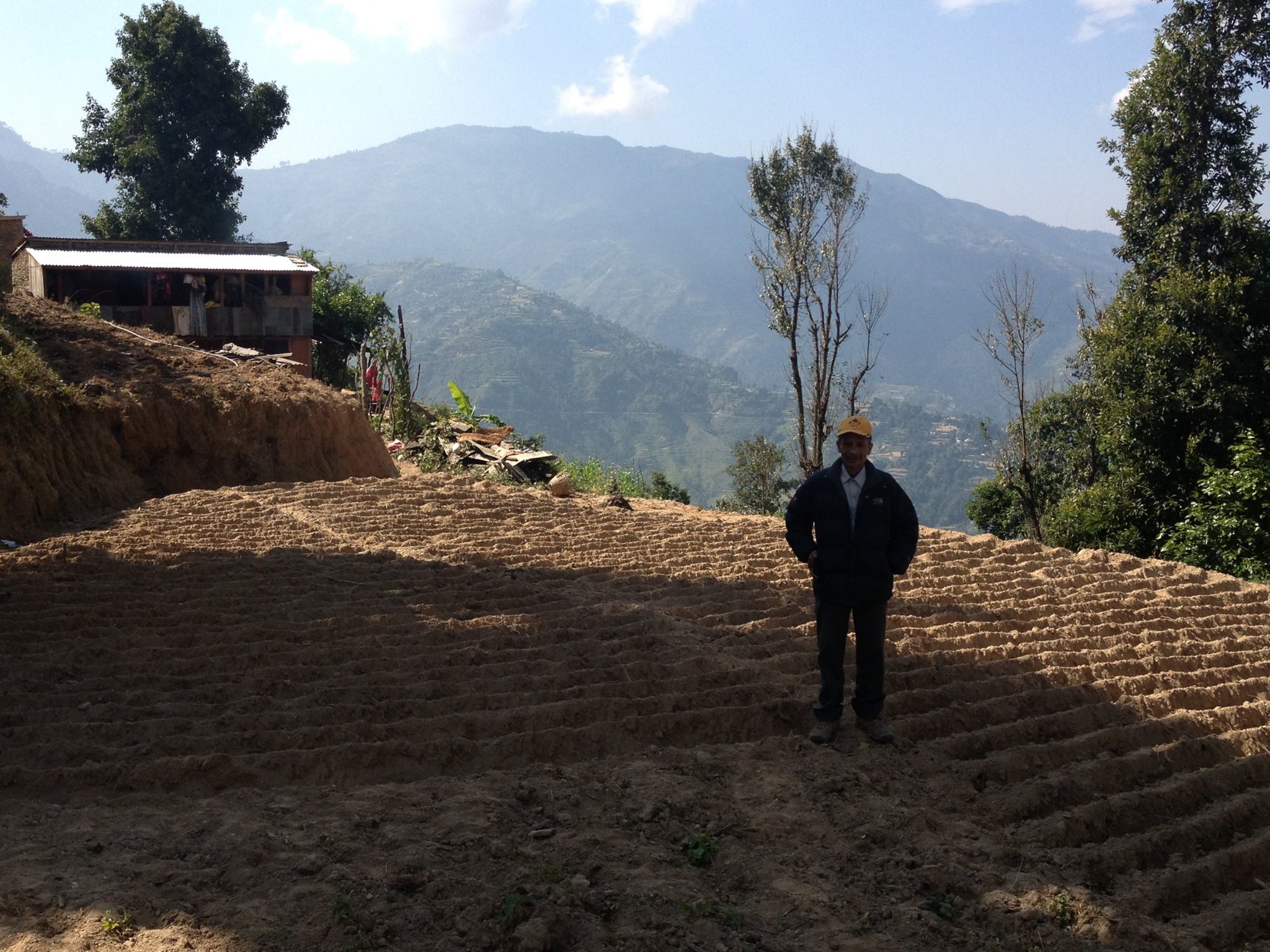
Krishna at his farm in Lauke, Nepal - the site of our Pilot Project in March 2013
Beyond The Toilet
The 21st Canadian Conference on Global Health was held in Ottawa this past week. The hot topic was sanitation, with emphasis on collaborative health measures like maternal health and malnutrition. Toilets play a huge role in decreasing maternal mortality because expecting mothers will be less exposed to diseases anemia and diarrhea. When sanitation is available people learn the importance of hand washing, infant mortality can be decreased by more than 1/3. WASH workshops are crucial for anyone working in our industry.

I went to Nepal for the first time in 2012 and ended up spending all year. When I wasn’t trekking the Himalaya or chilling at Phat Kath (see ThankBack Thursday), I could be found hunkered down learning the ropes of ‘international development.’ Before Martin and I pursued our passion for poo, I worked alongside an incredible group of Nepali women running a local organization named Chhimeki (translation: community). Their purpose was to improve the nutritional behaviour of pre-natal mothers and their families living in the Kathmandu valley. It was this experience that helped me truly understand the power of education. For the most part, families did not have adequate education on the importance of a nutritional diet, many of them didn't even have enough food to put on the table. Chhimeki empowers mothers by investing in agriculture and teaching families about food and nutrition. Chronic malnutrition and diarrhea are serious problems across Nepal – it plays a role in 60% of all child deaths. (UNICEF, 2011). Further, it is estimated that 50% of the 2.5 million that live in the Kathmandu Valley are forced to defecate in the open every day. Anyone who has seen this majestic city understands that human shit (and massive cow dumps) are a huge issue.
Whats the point?
The 21st Canadian Conference on Global Health was held in Ottawa this past week. The hot topic was sanitation, with emphasis on collaborative health measures like maternal health and malnutrition. Toilets play a huge role in decreasing maternal mortality because expecting mothers will be less exposed to diseases anemia and diarrhea. Moreover, educating mothers and their families about both nutrition and hygiene, can reduce infant mortality by more than 1/3. WASH workshops involving collaborative health measures are crucial for anyone working in our industry.
At Manavta, we are always seeking partners who support our collaborative health programs. If you are interested in joining our growing team of researchers or if you want to learn more about sanitation, we would love for you to contact us, become a partner or join our team.