The Dangerous Game
How Politics Are Failing the Sanitation Crisis.
Toilets are built. Beneficiaries are counted. Logos are stamped on the finished product and it is proclaimed as a victory. This is how big INGOs and political leaders control the narrative in our industry: they control the data, the budget, and the headlines. This concentration of power turns development into a theatre and ignores what actually happens on the ground.
A toilet built is just a number, but at Manavta we stand strong on our philosophy that only a toilet used is worth building. Real sustainable change comes when communities embrace new behaviours, when washing hands, keeping toilets clean, and ensuring girls have a safe space become everyday norms.
The Problem With Data.
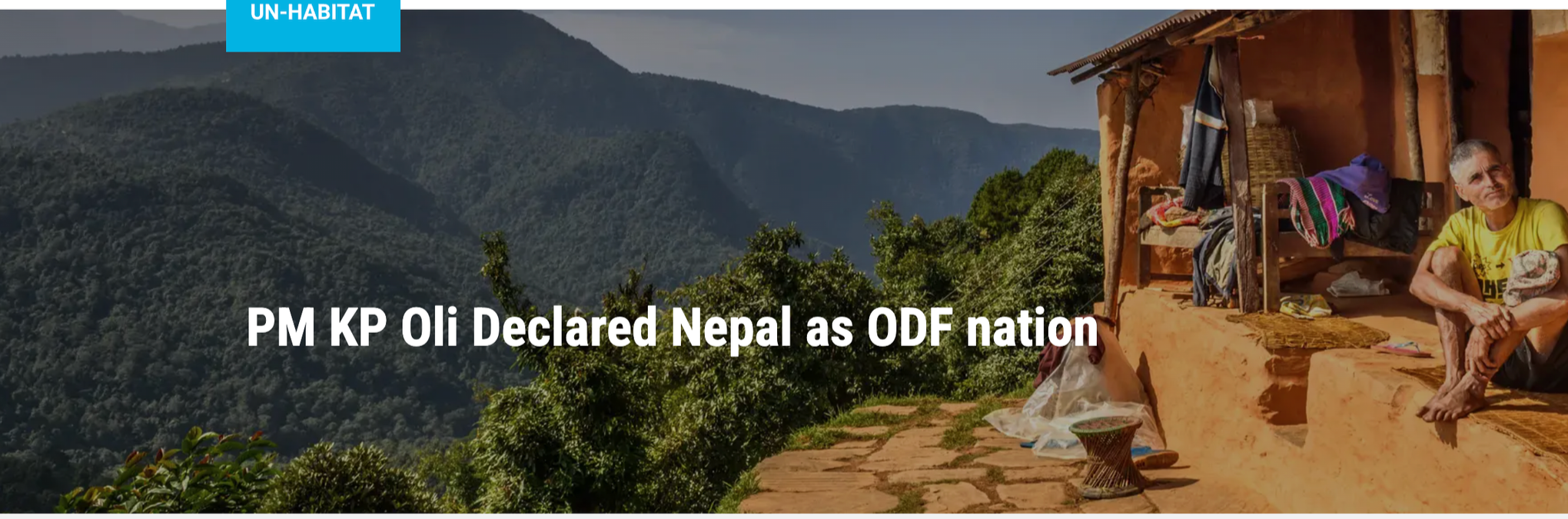
In 2019, Nepal’s Prime Minister at the time, proudly declared the country “open defecation free.” The announcement made international headlines and was echoed by major UN agencies and INGOs. Yet anyone working in the WASH sector, on the field, knows the truth. During my recent trip to Jumla this November, I witnessed a harsh reality, people still use riverbanks and roadsides to relieve themselves, while just downstream, women washed their family’s clothes in the same water.
What’s even more alarming? In some places, toilets exist, yet open defecation continues, as shown in this short clip I took while completing a research assessment at Kalika Basic School, one of our project sites. You can clearly see that there is some feces on the ground just steps away from a toilet.
Recent studies will support this claim, as a 2024 report by the Sustainable WASH for All (SUSWA) project highlights that approximately 11% of households in the Karnali Province lack toilets, and 17% have only temporary facilities. These types of reports quietly expose the gap between statistics and reality in Nepal.
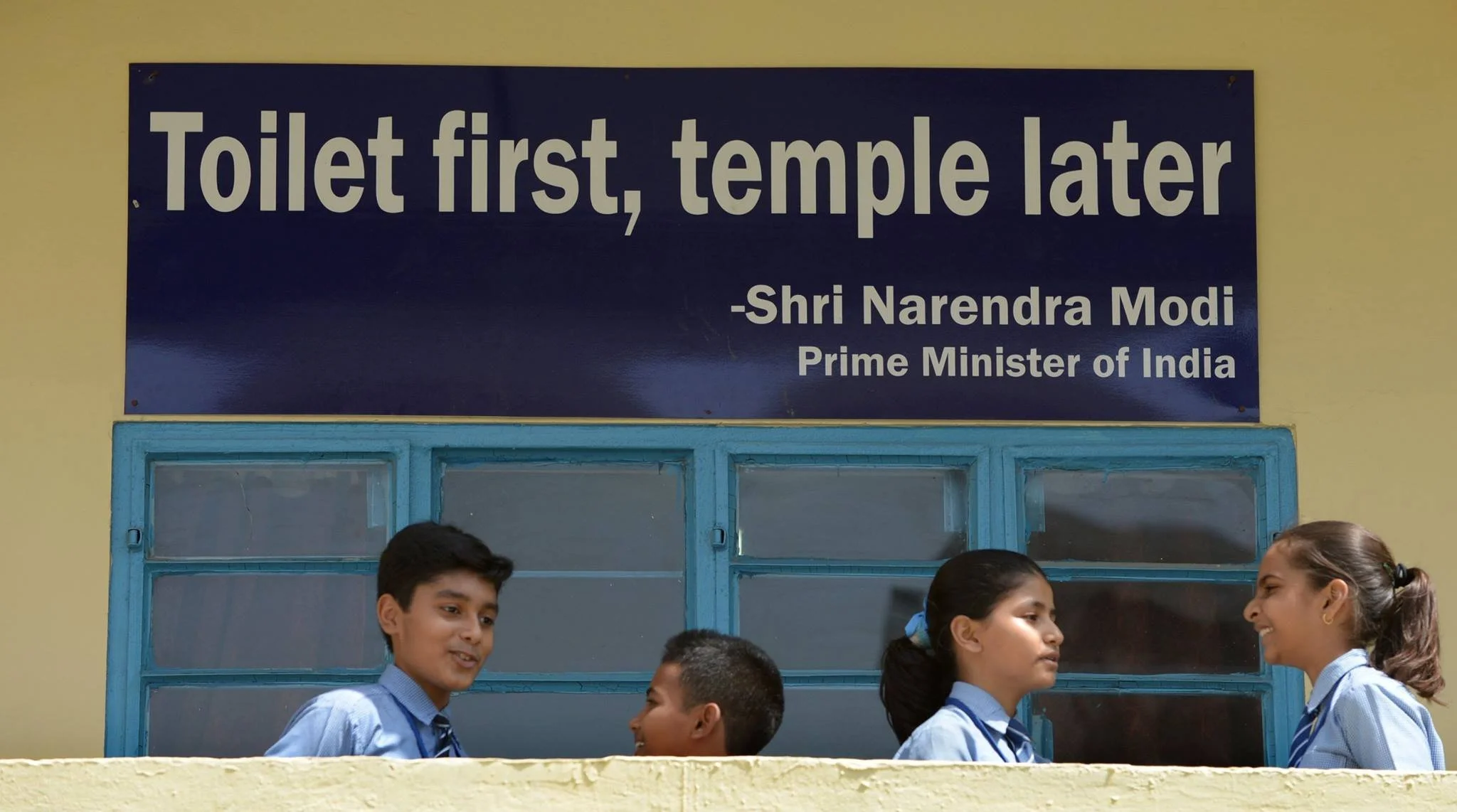
In 2014, India launched the Swachh Bharat campaign, promising toilets for all, vowing to build more toilets than temples across the country. The program reported over 100 million toilets built in just a few years. The slogans made for great political headlines, but of course the reality remained shitty. A study conducted in 2019 by the Rice Institute suggests that upwards of 44% of the population in rural areas still practice open defecation, based on data collected between 2014 and 2018. This highlights how the campaign focused on quick infrastructure band-aid solutions rather than creating real, sustainable behaviour change.
The Illusion of “Beneficiaries.”
Walk into a rural community almost anywhere in the Global South and you’ll see it: a cement toilet standing dirty, empty, unused. On Manavta projects, we’ve seen locked stalls packed with tools and others destroyed entirely, the bricks pulled out to build something communities consider more important. These aren’t failures of infrastructure, they’re failures of education, behaviour change and understanding what people prioritize.
On paper, the project is “complete” and in the report, every person around has benefited. But after 13 years of being on the field, we have seen a completely different story.
Okhaldhunga Research Trip 2015 with our partners PDCN Nepal.
During a research visit in 2015 to Mamkha School in the Okhaldhunga district, we filmed a school where, if you listen closely, a member from our local partner loudly says, “They’re not using any of the toilets.”
That line hit harder than any statistic I’ve ever read. It exposed the uncomfortable truth behind sanitation projects: building toilets is easy, but getting people to use them and maintain them is not. Students, especially girls, are left with dirty, neglected toilets that, while technically functional, offer neither the safety nor the privacy they needed. As a result, during the school day, boys and girls alike would either hold it until they got home, relieve themselves in the fields or just not show up in the first place. Turning a basic human need into a daily struggle.
The Dangerous Game.
We need to stop worshipping data and start questioning it. Stop building for numbers and start building for people. Fund community-led projects, not just the infrastructure. Measure use, not construction. And for once, let’s be honest about what we don’t know and admit making mistakes or needing more time to make sure behaviour change is happening.
WASH projects are already underfunded, and that’s why politics is such a dangerous game. WASH funding has decreased by a third since 2015, the same year the Sustainable Development Goals were agreed upon. In fact, in the first two years of the COVID-19 pandemic, aid targeted specifically at improving water supply and sanitation globally fell more sharply than almost all other sectors, despite its importance in controlling infection.
EDUCATION IS THE WEAPON
When I returned to Namuna School in Jumla in 2025, our toilets and water system were intact and in use. But some students were still using rocks to clean themselves. Not because facilities were missing, but because behaviour hadn’t changed. This is not a toilet problem, but a human problem.
To address this, we completed another educational WASH program in partnership with local public health professionals from the Karnali Health Sciences Academy. The goal was simple but crucial: to reinforce hygiene practices, shift behaviours, and ensure that access to clean water and toilets translates into lasting health and dignity. Sustainable change happens not only through construction but through education, by helping communities understand the “why” behind the “what.”
Since completing our work at Namuna School, we have started working at Kalika Basic School in the neighbouring rural municipality of Tatopani. We have helped restore the school’s water supply, repaired and maintained their toilets, and directed the majority of our resources toward WASH education for students and teachers.
In 2026, we hope to ramp up this work, building additional toilets to meet the school’s growing needs and expanding our community-based WASH education so behaviour change can take root for the long term.