#GIVEASHIT

ThankBack Thursday
This week's ThankBack is focused on the people who continue to help us spread the word about the global sanitation crisis and our approach to ending it!...
This week's ThankBack is focused on the people who continue to help us spread the word about the global sanitation crisis and our approach to ending it!
Isabela Varela
A big shout out to Isabela Varela and the Faculty of Education at the University of Alberta who finally succommed to our Toilet Nerds’ constant plug of Manavta around campus. She just published an incredible piece in BEdition Magazine about what Manavta is all about. Thanks for helping to spread the word about improving safe sanitation around the world!
Our Fundraising Team
An equally huge shout out to Elizabeth Durnford, Alex Wassell, Dan Burrow, Antony Laakso, Molly Schaefler, Aaron Stevens, Andrew Collicot, Majd, Ali and the whole team at Laurier Social House. We had an amazing turnout on Saturday and raised just over $1000! That's two thirds of our next project! Thanks to everyone who came out on Saturday, we're looking forward to seeing you again soon!
Ranting about Gender
News from the subcontinent last week focused on the rat poison found in drugs administered to women following a group sterilization procedure in Chhattisgarh, India. While concern has rightfully been raised regarding the quality of pharmaceuticals in India, another issue within this story seems to have raised few eyebrows – why are the women being sterilized?...
The Brief
News from the subcontinent this week focused on rat poison found in drugs administered to women following a group sterilization procedure in Chhattisgarh, India. While concern has rightfully been raised regarding the quality of pharmaceuticals in India, another issue within this story seems to have raised few eyebrows – why are these women being sterilized in the first place?
Sterilization procedures performed on women (called tubal ligations) are more invasive and riskier than those performed on men (vasectomies), but most news coverage has simply noted that ‘cultural taboos’ make the procedure for women more common in India. They fail to engage with the fact that population control in India comes in the form of enacting control over women’s bodies rather than through other (safer and less invasive) means.
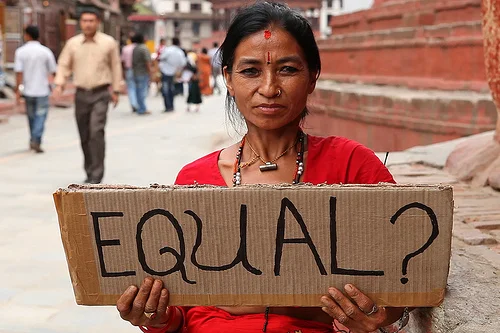
Gender inequalities on the subcontinent are not news. In 2012, India ranked 57th out of 86 countries on the Social Institutions and Gender Index. Nepal ranks better than its neighbors on the Index, but discrimination persists. According to Nepal’s 2013 MDG report, only 57.4% of females over 5 are literate compared with 75.1% of males. Recent increases in female school attendance may improve this statistic in the future.
Bringing it home
Of course, gender inequality is not just an issue in the developing world. Women face discrimination in the rich world, too (see, for example, the recent news on a group teaching lessons in enacting violence on women). Fighting pervasive prejudice globally requires changes in attitudes and increased opportunities for marginalized genders to voice their perspectives and needs.
With indications that lack of toilets in schools may impact school attendance in Nepal, particularly for girls post-puberty, toilet-building takes on one of the many pieces required for continuing to improve gender equity. And that’s why we #giveashit.