#GIVEASHIT
The Crapper
Happy World Toilet Day!
Poop is one of my favourite topics of conversation, and the reason why today is such a special day. Happy World Toilet Day – lets celebrate one of our most important inventions...
Happy World Toilet Day!
Poop is one of my favourite topics of conversation, and the reason why today is such a special day. Happy World Toilet Day – lets celebrate one of our most important inventions.
Know your Toilet
Improved sanitation is the reason why most of our species no longer lives with brutal dieseases like cholera, dysentery and typhus — not to mention the bubonic plague. Sanitation itself dates back as far as the 1800 B.C.E. when the Minoans from the Island of Crete used underground clay pipes for sanitation and water supply. Almost 1500 years later, the Romans and Egyptians followed suit and introduced the concept of indoor pooping, with some incredibly designed toilets truly fit for a king!
Our modern flushing toilet was formally developed by Alexander Cummings in 1775. Contrary to popular belief, Sir Thomas Crapper did not invent the flush toilet. He was, however, a game changer in the industry with 9 patents to his name and serving the crown as their plumber. Legend has it that Queen Elizabeth I was too embarrassed to use the flush toilet since the noise would inform the palace of her bowel movements.
Over 200 years later, the world has made some astounding technological advances and yet the toilet remains relatively unchanged. A single flush of the toilet uses about 3.5 gallons of water. That puts tremendous strain on limited water resources (when billions of people are flushing toilets daily).
Innovation is Key
As we speak, our incredible team of engineers is hard at work developing a dry toilet system that produces agricultural inputs with a technically efficient structure. For the 2.5 billion that are still forced to defecate in the open, we must introduce toilets that are operable without electricity, running water or septic systems. Many organizations spend a lot of money on septic tanks and complicated systems that our engineers can't disagree with more. Check out more about these designs via the Reinvent the Toilet Fair.
Today, while you are sitting on your toilet doing your thing – please remember how truly fortunate we are, think about those who aren't, and for god's sake use febreze after you cut the cheese.
Beyond The Toilet
The 21st Canadian Conference on Global Health was held in Ottawa this past week. The hot topic was sanitation, with emphasis on collaborative health measures like maternal health and malnutrition. Toilets play a huge role in decreasing maternal mortality because expecting mothers will be less exposed to diseases anemia and diarrhea. When sanitation is available people learn the importance of hand washing, infant mortality can be decreased by more than 1/3. WASH workshops are crucial for anyone working in our industry.

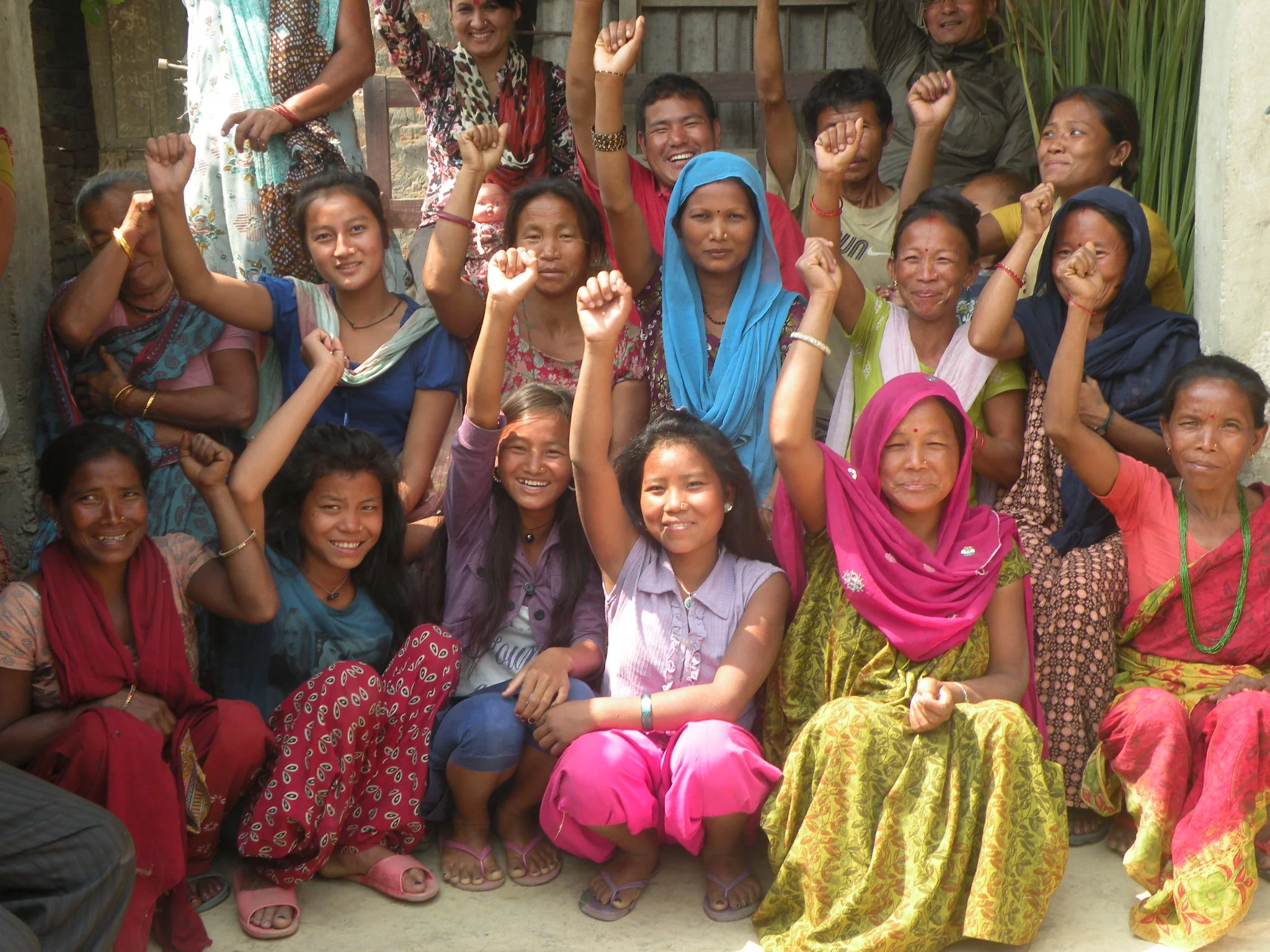
I went to Nepal for the first time in 2012 and ended up spending all year. When I wasn’t trekking the Himalaya or chilling at Phat Kath (see ThankBack Thursday), I could be found hunkered down learning the ropes of ‘international development.’ Before Martin and I pursued our passion for poo, I worked alongside an incredible group of Nepali women running a local organization named Chhimeki (translation: community). Their purpose was to improve the nutritional behaviour of pre-natal mothers and their families living in the Kathmandu valley. It was this experience that helped me truly understand the power of education. For the most part, families did not have adequate education on the importance of a nutritional diet, many of them didn't even have enough food to put on the table. Chhimeki empowers mothers by investing in agriculture and teaching families about food and nutrition. Chronic malnutrition and diarrhea are serious problems across Nepal – it plays a role in 60% of all child deaths. (UNICEF, 2011). Further, it is estimated that 50% of the 2.5 million that live in the Kathmandu Valley are forced to defecate in the open every day. Anyone who has seen this majestic city understands that human shit (and massive cow dumps) are a huge issue.
Whats the point?
The 21st Canadian Conference on Global Health was held in Ottawa this past week. The hot topic was sanitation, with emphasis on collaborative health measures like maternal health and malnutrition. Toilets play a huge role in decreasing maternal mortality because expecting mothers will be less exposed to diseases anemia and diarrhea. Moreover, educating mothers and their families about both nutrition and hygiene, can reduce infant mortality by more than 1/3. WASH workshops involving collaborative health measures are crucial for anyone working in our industry.
At Manavta, we are always seeking partners who support our collaborative health programs. If you are interested in joining our growing team of researchers or if you want to learn more about sanitation, we would love for you to contact us, become a partner or join our team.